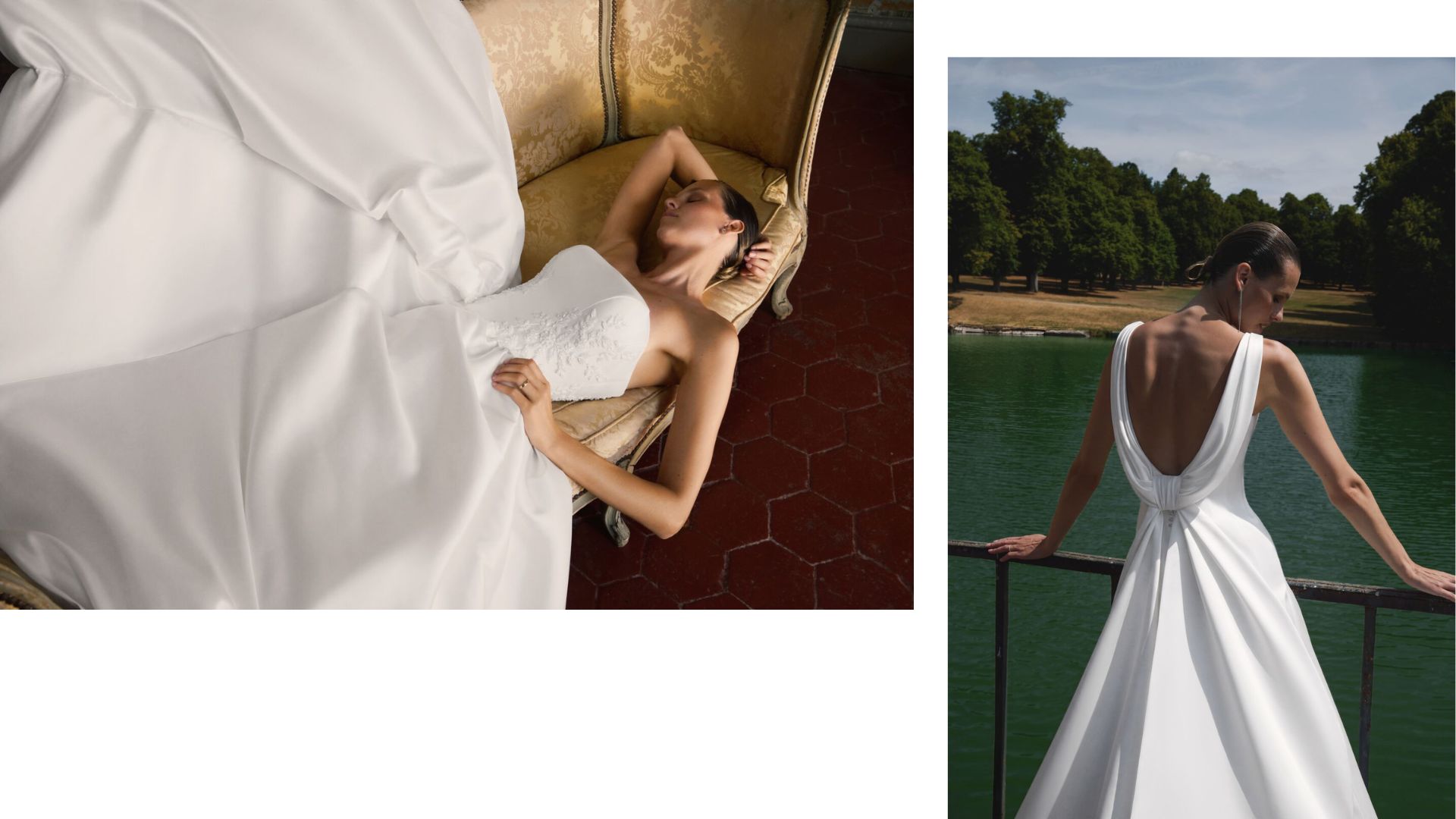
Your Wedding, Your Dress
There is no single formula for how to choose a wedding dress. Your venue, personal style, and the way you want to move through the day all matter. So do the details you notice once the dress is on: how the fabric falls, where the waist sits, and how the construction supports you.
When choosing a wedding dress, consider the silhouette, fabric, fit, and design details that best reflect your personal style. Start with what feels like you, then pay attention to how each gown looks, fits, and moves.
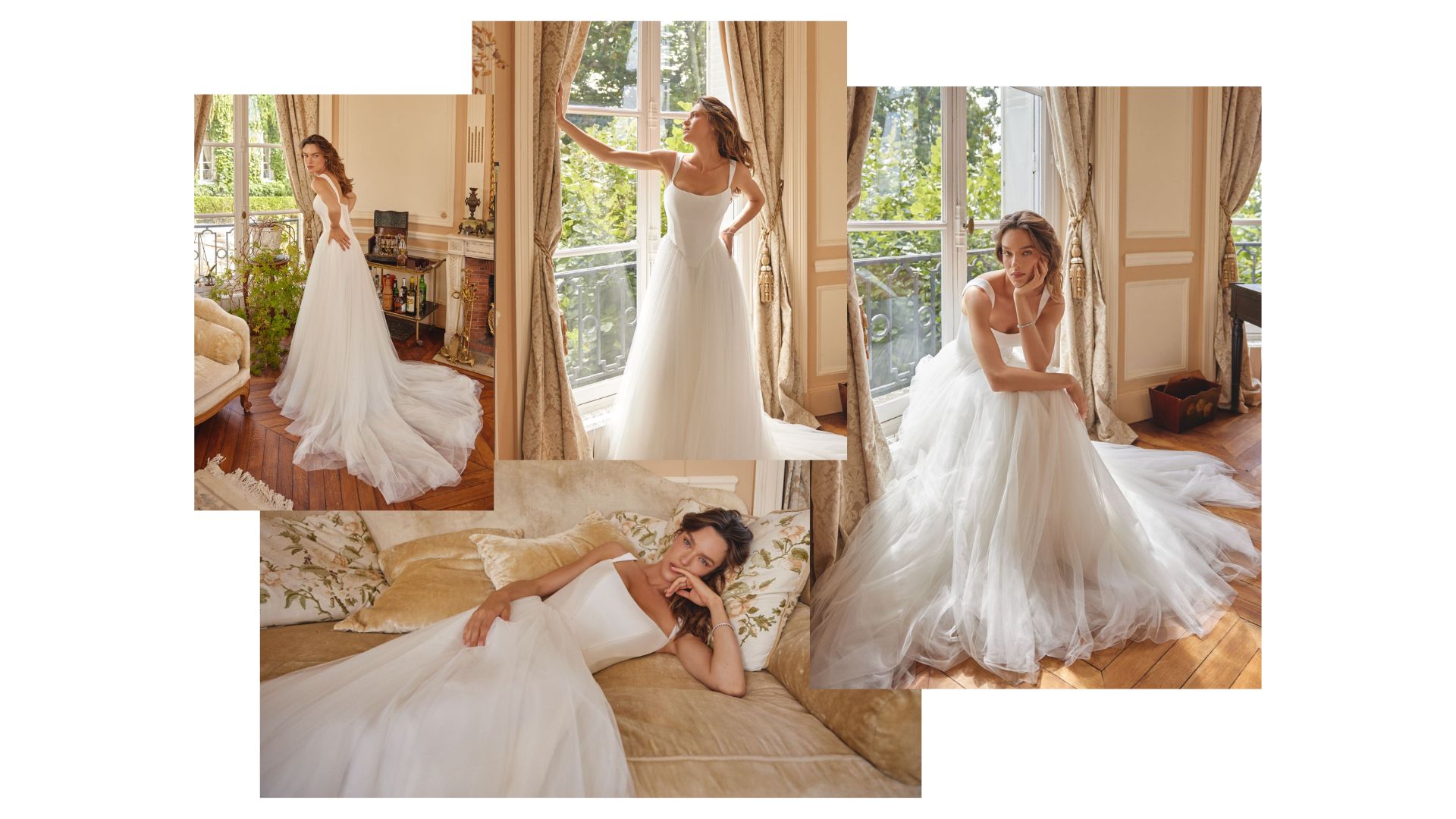
Justin Alexander - Millie
Start With Silhouette
Silhouette changes how a wedding dress looks and moves. A fit and flare follows the body before opening through the skirt, while an A-line creates more movement from the waist down. A ball gown uses volume and structure to create a more defined shape.
For a fitted option, Justin Alexander Style Lennon is a stretch crepe fit and flare wedding dress with a Basque waist. The clean fabric keeps the focus on the silhouette and construction. Style Madison takes a different approach with a stretch Mikado A-line silhouette, draped strapless neckline, and ruched skirt.
Neither silhouette is inherently more bridal than the other. The right choice is the one that works with your proportions and feels natural when you walk, sit, and move.
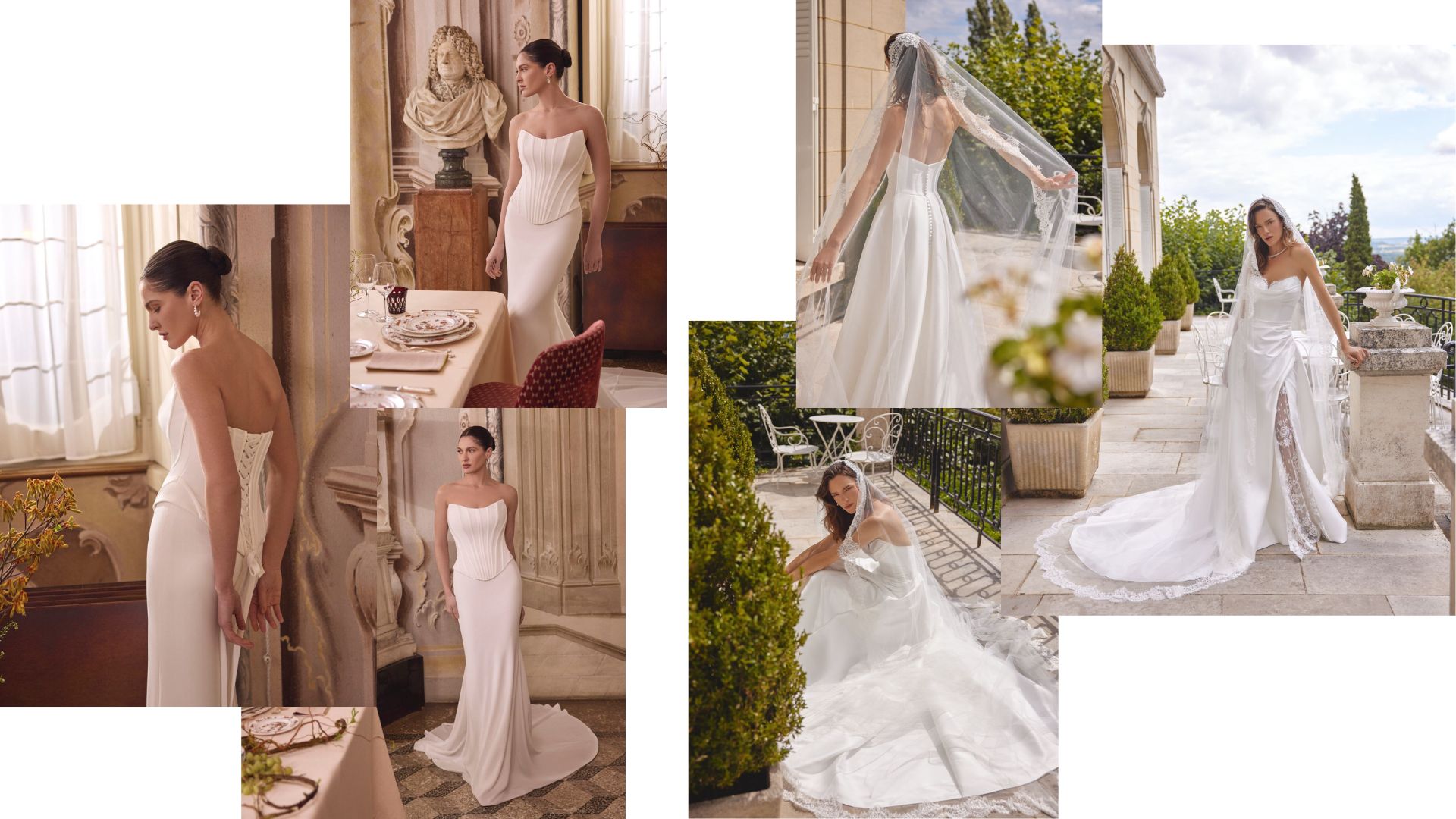
Justin Alexander - Lennon Justin Alexander - Madison
Consider the Fabric
Fabric determines more than the look of a gown. It affects its structure, weight, and movement.
Mikado holds its shape and works particularly well for structured silhouettes. Crepe creates a softer, closer fit. Lace adds texture, while tulle and organza can build volume without the same visual weight as a structured satin.
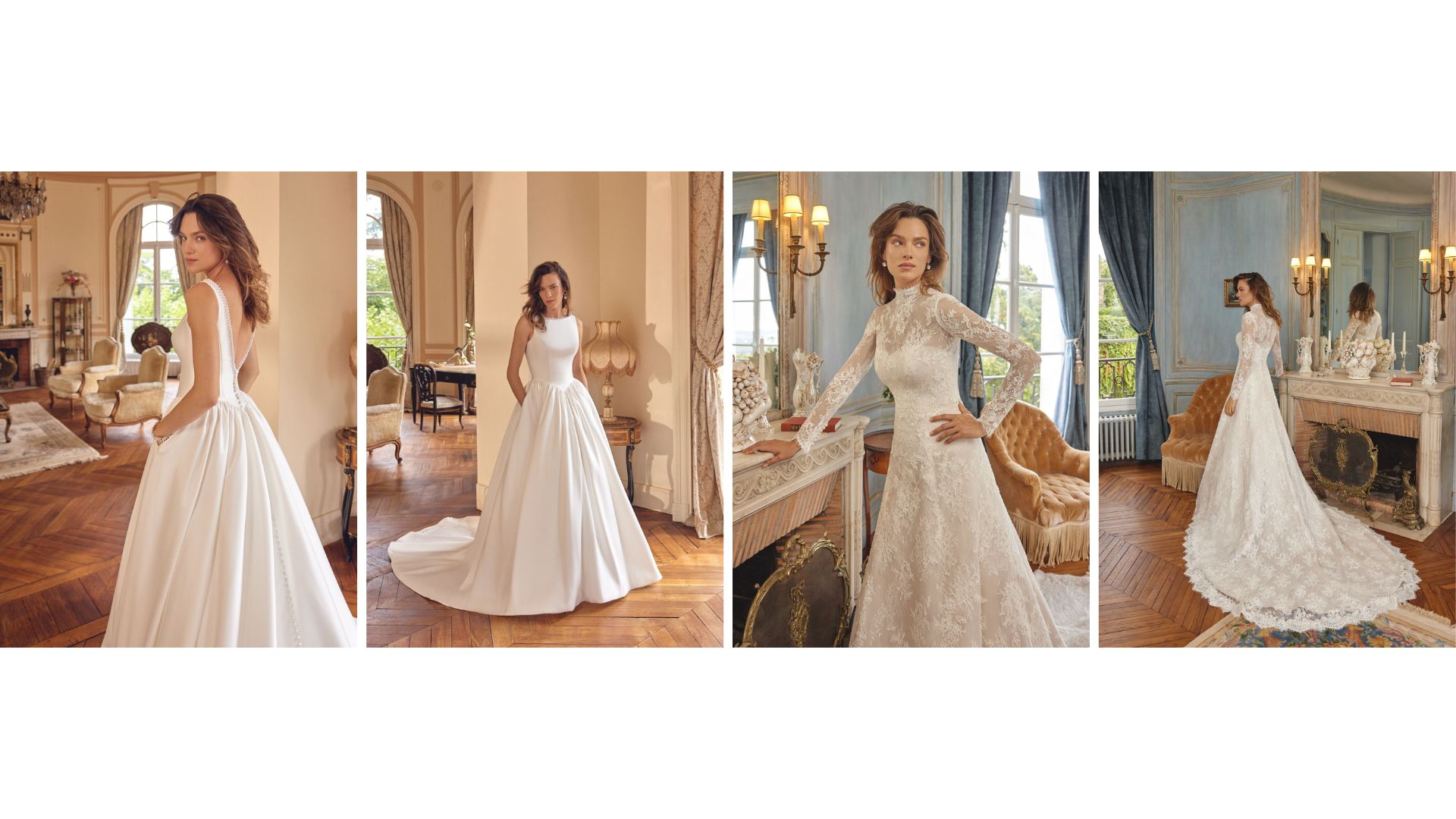
Justin Alexander Style Mckenna uses Mikado to give its ball gown silhouette definition, with a pearl-trimmed Sabrina neckline and low V-back. For a softer effect, Style Merida uses matte Alençon corded lace in a slim A-line silhouette finished with eyelash trim.
Think beyond how a fabric photographs. Consider how it feels three hours into your reception and how it moves when you walk.
Justin Alexander - Mckenna Justin Alexander - Merida
Decide How Much Detail Feels Right
A wedding dress does not need extensive embellishment to make an impact. Clean seaming, an unexpected waistline, or a strong neckline can provide just as much visual interest as lace and beading.
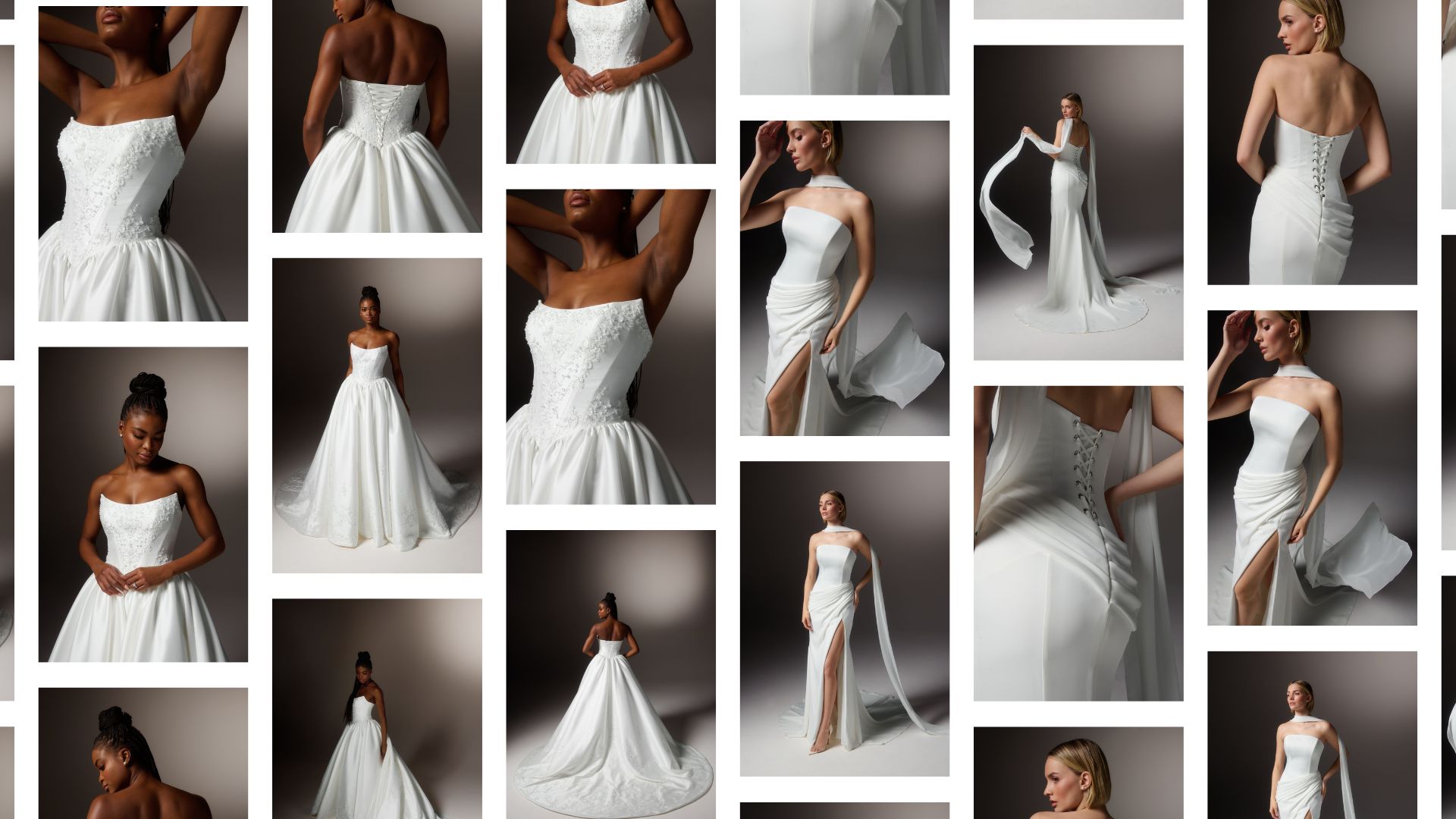
For a more fashion-forward approach, Justin Alexander Signature Style Lucida pairs clean silky crepe with a strapless arched neckline and asymmetrical waistline. Style Verona creates a different effect with stretch Mikado, a cat eye neckline, and beaded embroidery across the bodice.
The distinction comes down to where you want the eye to go: silhouette, fabric, neckline, embellishment, or a combination of details.
Justin Alexander Signature - Lucida Justin Alexander Signature - Verona
Choose the Dress That Works for You
Wedding dress shopping comes with plenty of opinions, but your dress should ultimately make sense for you.
Pay attention to how it fits without constant adjustment. Walk in it. Sit down. Look at it from the front, back, and side. Notice the weight of the skirt, the support of the bodice, and whether you feel comfortable moving naturally. Ask your bridal stylist which fit adjustments may be possible through alterations.
Designer wedding dresses can offer countless silhouettes, fabrics, and details. The goal is not to find the option that checks the most boxes. It is to find the combination of fit, fabric, construction, and personal style that feels considered from every angle.
Your wedding. Your dress. Your way.